I almost skipped it this year.
The workshop I wanted was full. And the Leadership Event had already taken place in April, decoupled from the conference this year. What remained was just the conference itself. And so I went, a little reluctantly, telling myself it would probably still be fine.
And it was more than fine.
Petra, Arne and the team once again created something genuinely rare: a warm, human atmosphere that earns the conference its name. I arrived the evening before for the Blind Product Dinner, made first connections with people who’d already been through a workshop day, and showed up the next morning in exactly the right headspace.
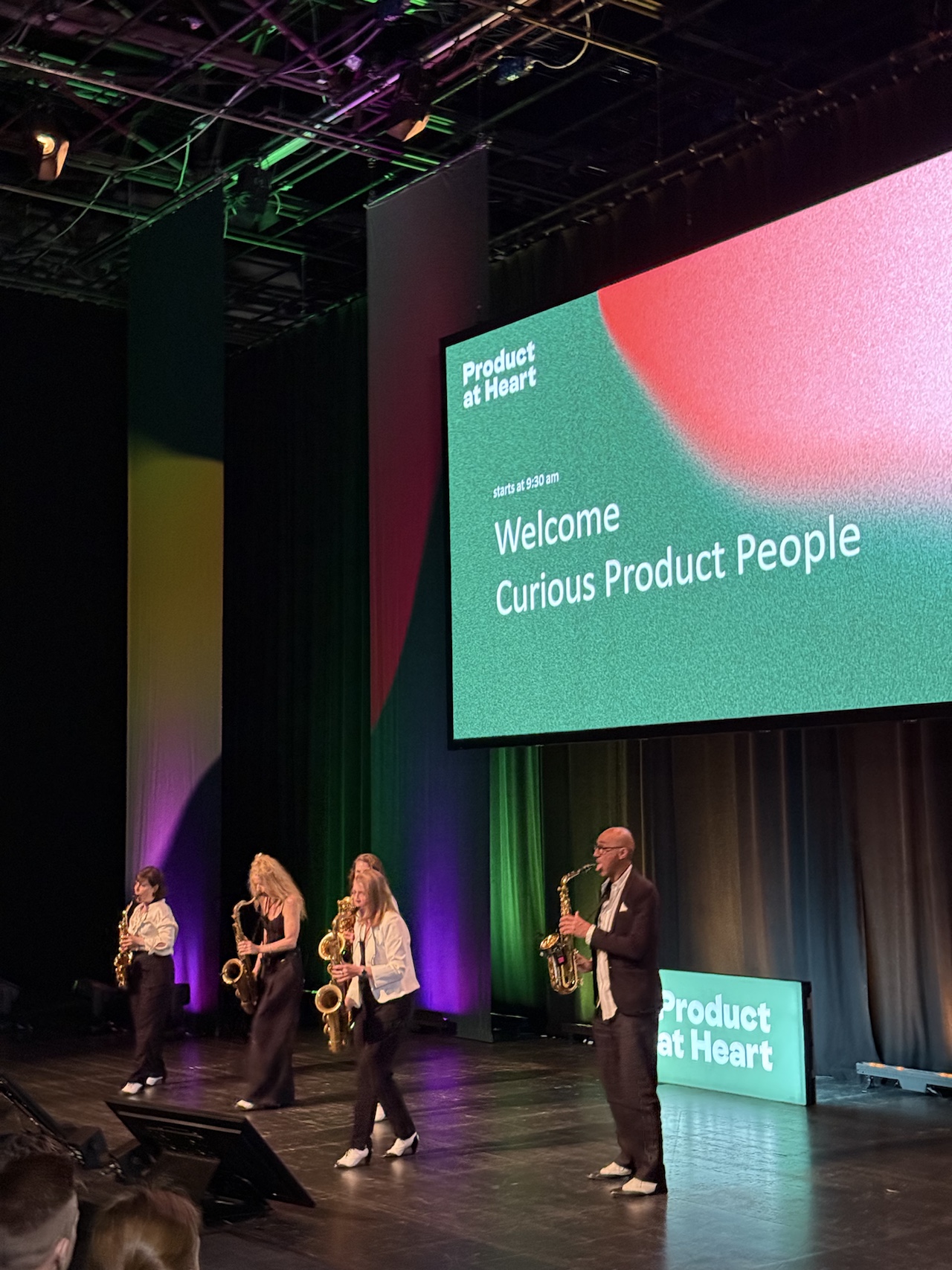
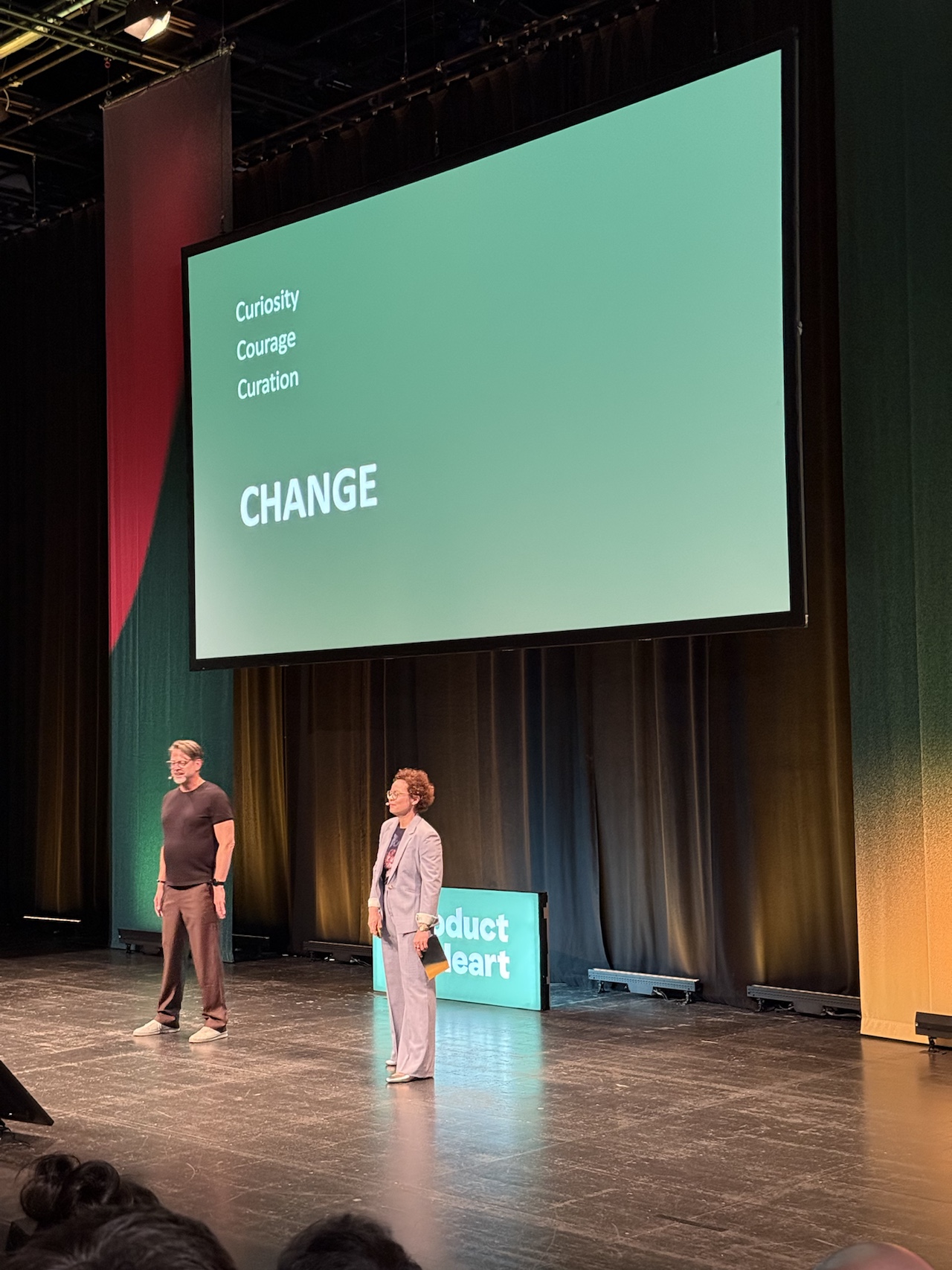
The opening set the tone immediately. Saxophonists from Hamburg. David Bowie’s Changes. And a question hanging in the air that stuck with me all day:
How much are you personally willing and able to change?
“If we don’t invent the future, someone else will do it for us. And it will be their future, not ours.”
— Johannes Kleske, Futurist
It reminded me strongly of Obama’s speech at the opening of the Presidential Center in Chicago in June 2026, where he made a similar point: we give away the power to shape our own future when we think someone has to lose for us to win. Win-win is the goal. And in both contexts, the message is the same: show up, contribute, don’t leave the future to someone else.
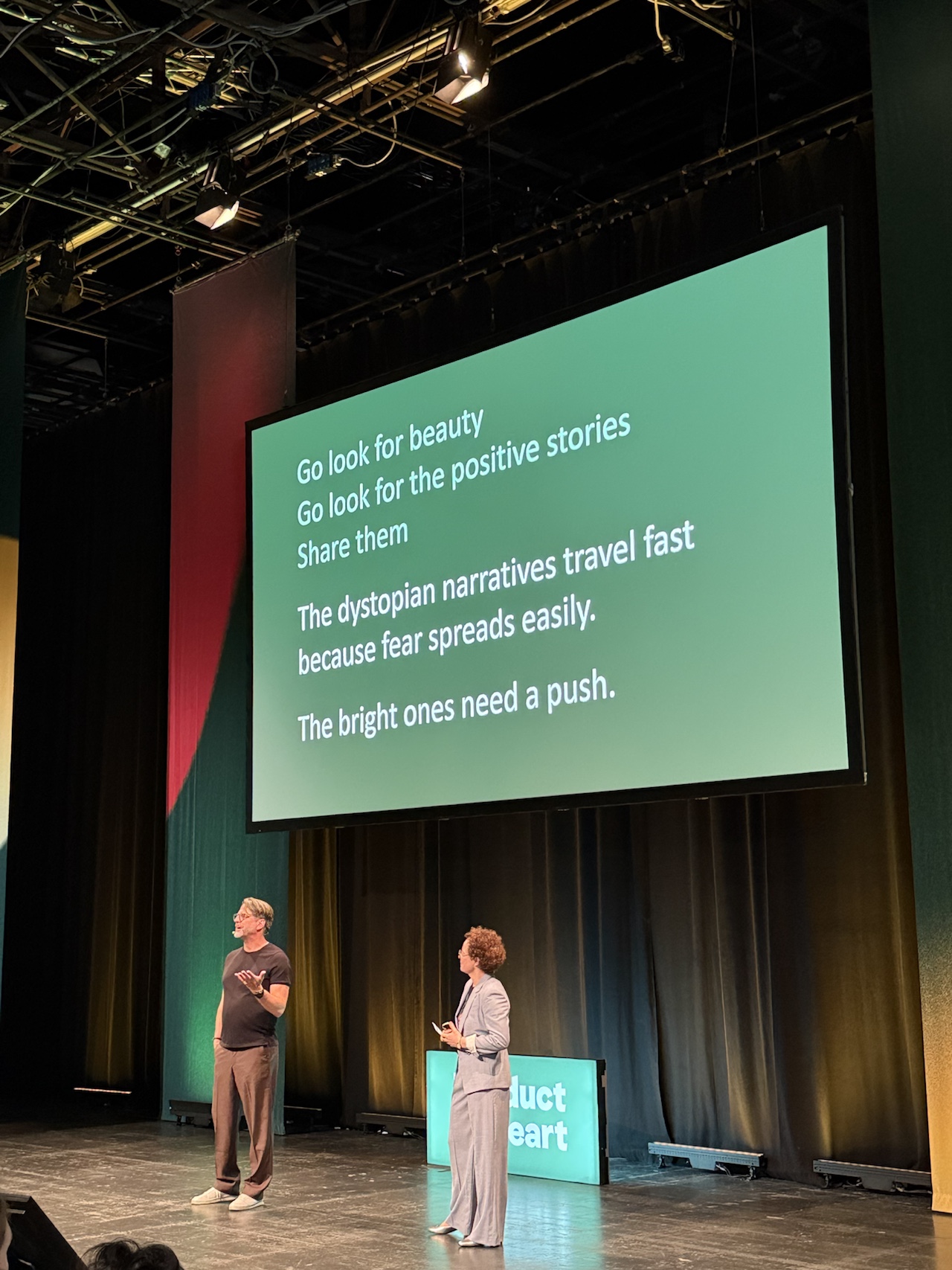
So turn and face the strange. Don’t emphasize the dark. Start to contribute to the light.
With that framing in place, here’s what stayed with me from the day.
Christian Idiodi: The Era of the Product Creator
Christian’s keynote was the one that hit me hardest, and probably the most personally.
He opened with the story of the busy PM. I felt called out immediately.
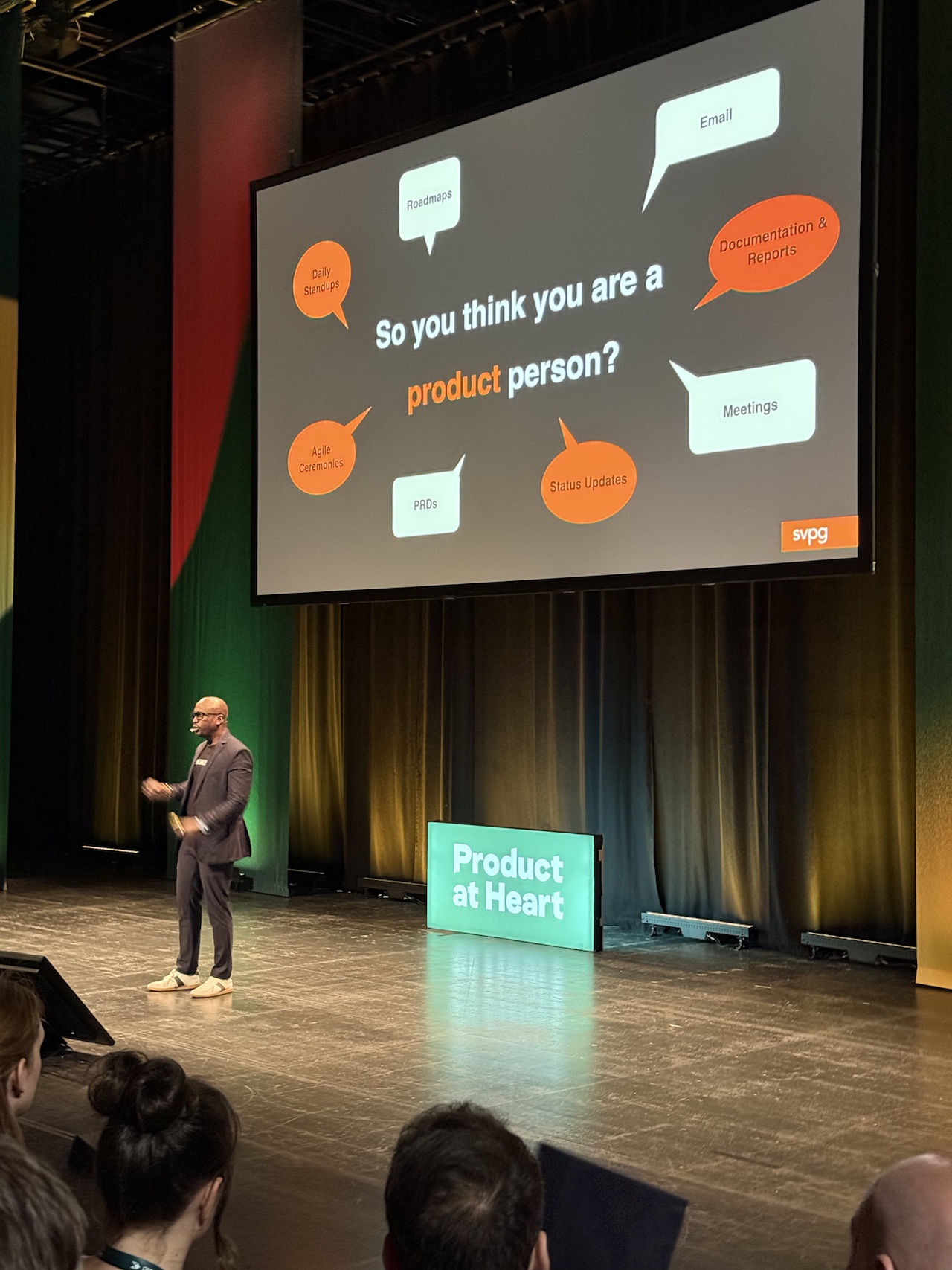
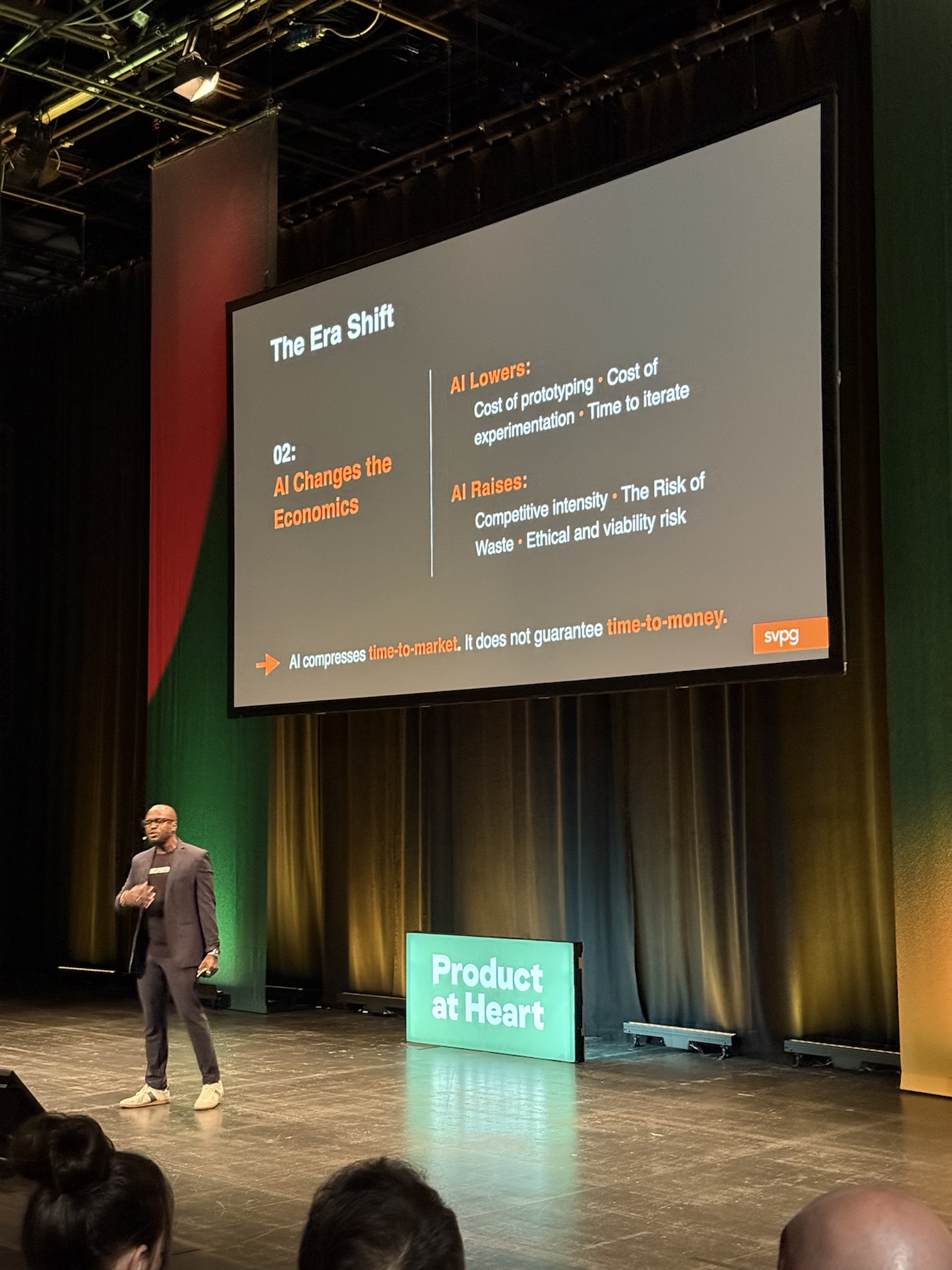
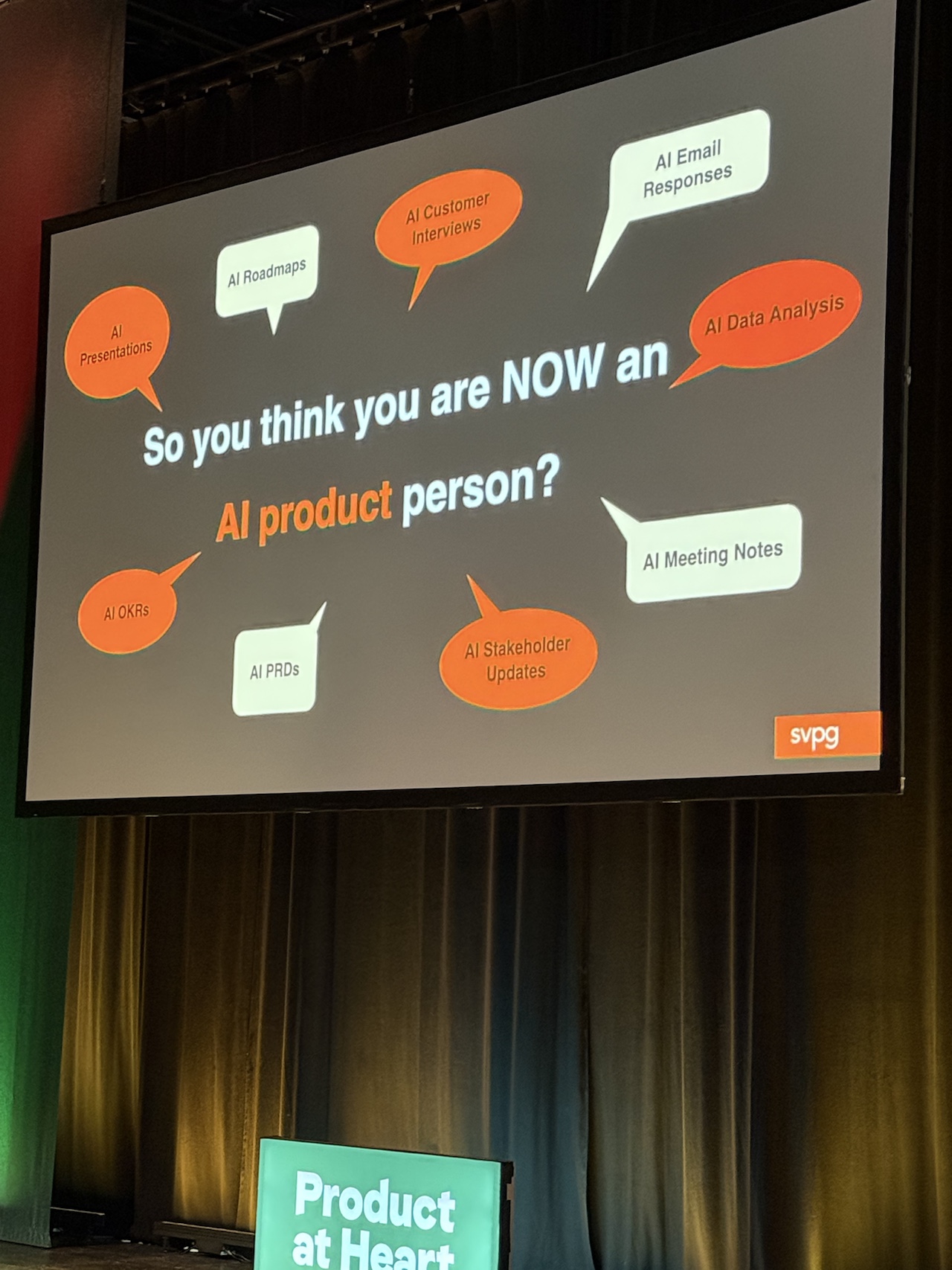
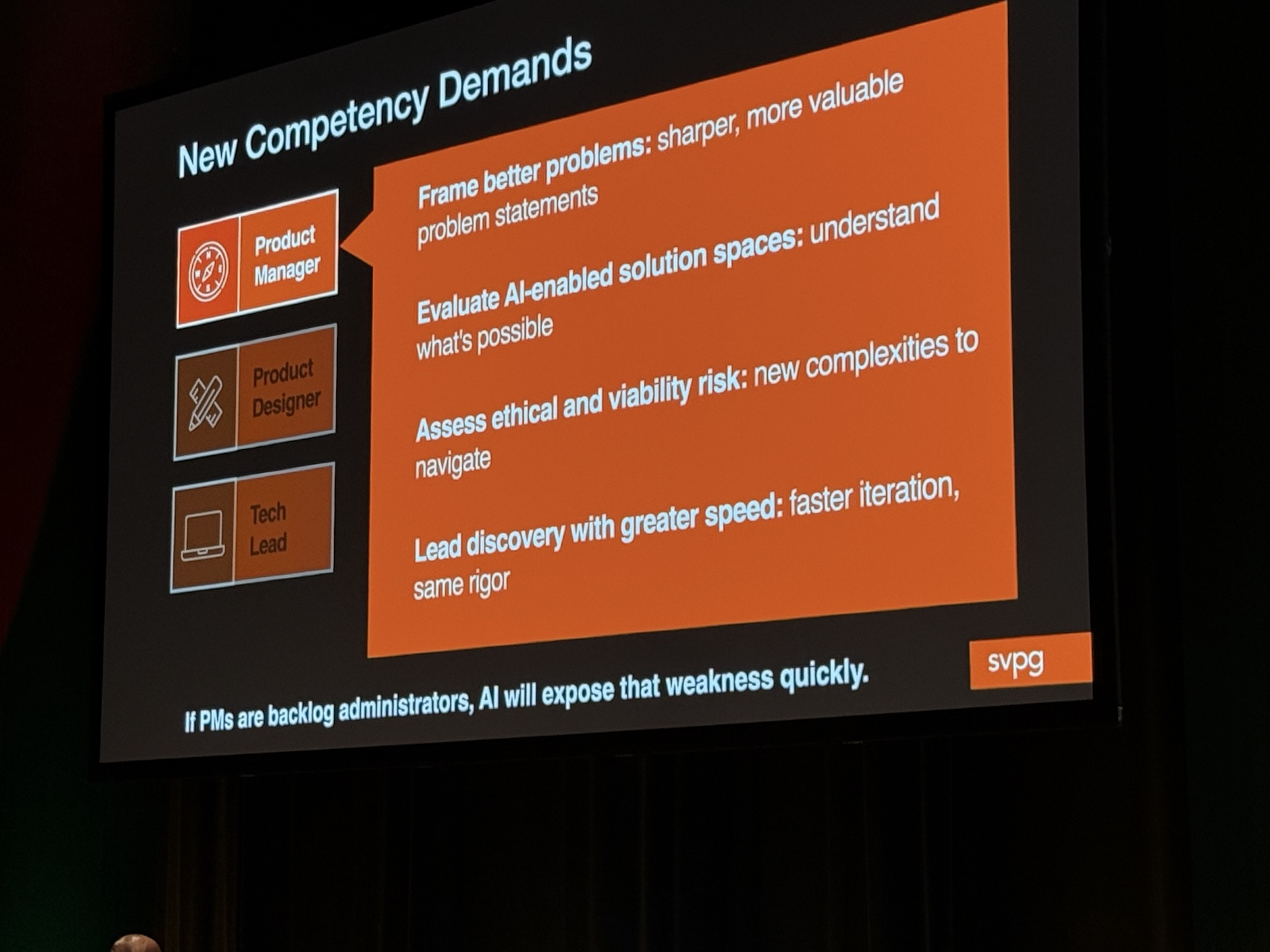
I’ve been asking myself for a while what my role in an AI world actually looks like, and I’ve been missing a clear direction. Christian gave me one. His core argument: AI lowers the cost of building. But it raises the cost of building the wrong things. Delivery is getting commoditized. Bad strategy is getting more expensive. Discovery becomes the real competitive edge.
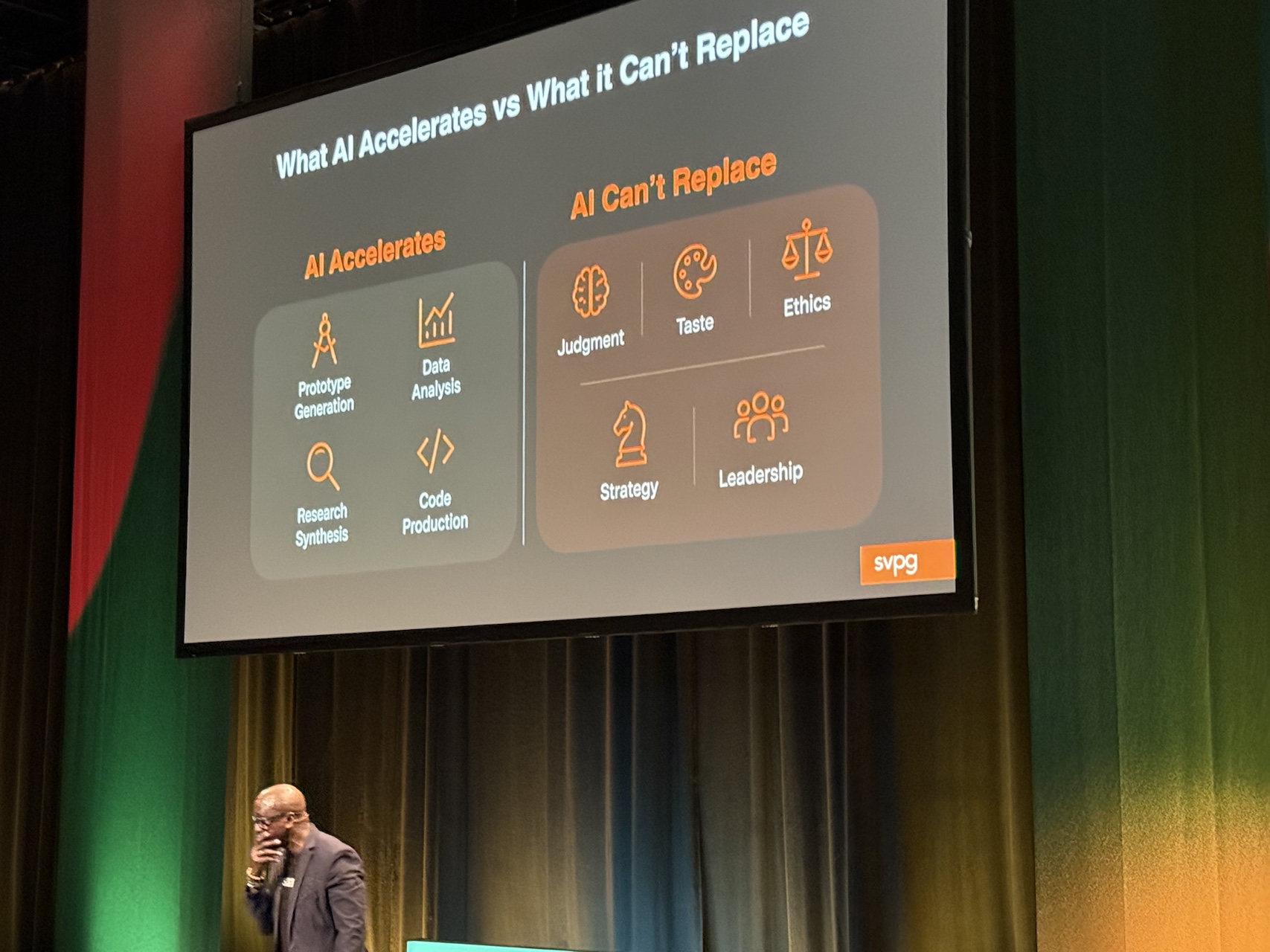
And the part that landed deepest: AI accelerates prototype generation, data analysis, research, code production. But it can’t replace judgment, taste, ethics, strategy, or leadership.
That’s the answer I was looking for. That’s where I want to focus. Especially product sense. It’s something I want to keep developing deliberately, and Christian’s talk gave me a concrete direction to work toward.
One provocation he threw out that I keep thinking about: if you can write a prompt for an answer, so can an agent. If you make decisions purely from data, so can an agent. If you make decisions the same way every time, so can an agent. The implication is uncomfortable, and intentionally so.
Teresa Torres, Jan Werner & Surbhi Marwah: The Joy of the Merge Request and Its Limits
Three talks, one underlying tension that I didn’t notice until I stepped back.
Teresa shared 15 months of real AI experiments, starting from scratch as a genuine beginner, stepping out of her comfort zone, exploring opportunities she hadn’t looked at before. The result: actual AI products. Impressive, and honest in a way that conference talks rarely are.
Jan showed something similar from a different angle: building your own Product OS via Claude Code, creating prototypes fast, testing them with customers and stakeholders, handing off to engineering with something tangible in hand. Real examples from his company, not slides about what it could look like in theory. More from Jan here: handsonproduct.de/product-at-heart
Both described the same feeling afterward. Almost word for word: “Oh, it creates a nice feeling. It was the best time ever. I had the most fun.”
I get it. There’s something genuinely powerful about going from idea to something you can see, feel, and touch, fast. It’s crafting for me.
But both times, the same question came up for me: was the problem actually worth solving in the first place?
Surbhi answered it, without knowing the question had been asked. Her gentle but clear pushback: not every PM should start deploying code toward production. She comes from an engineering background and knows what it actually takes to build software that’s scalable and secure. The joy of the merge request is real. But it’s not the full picture.
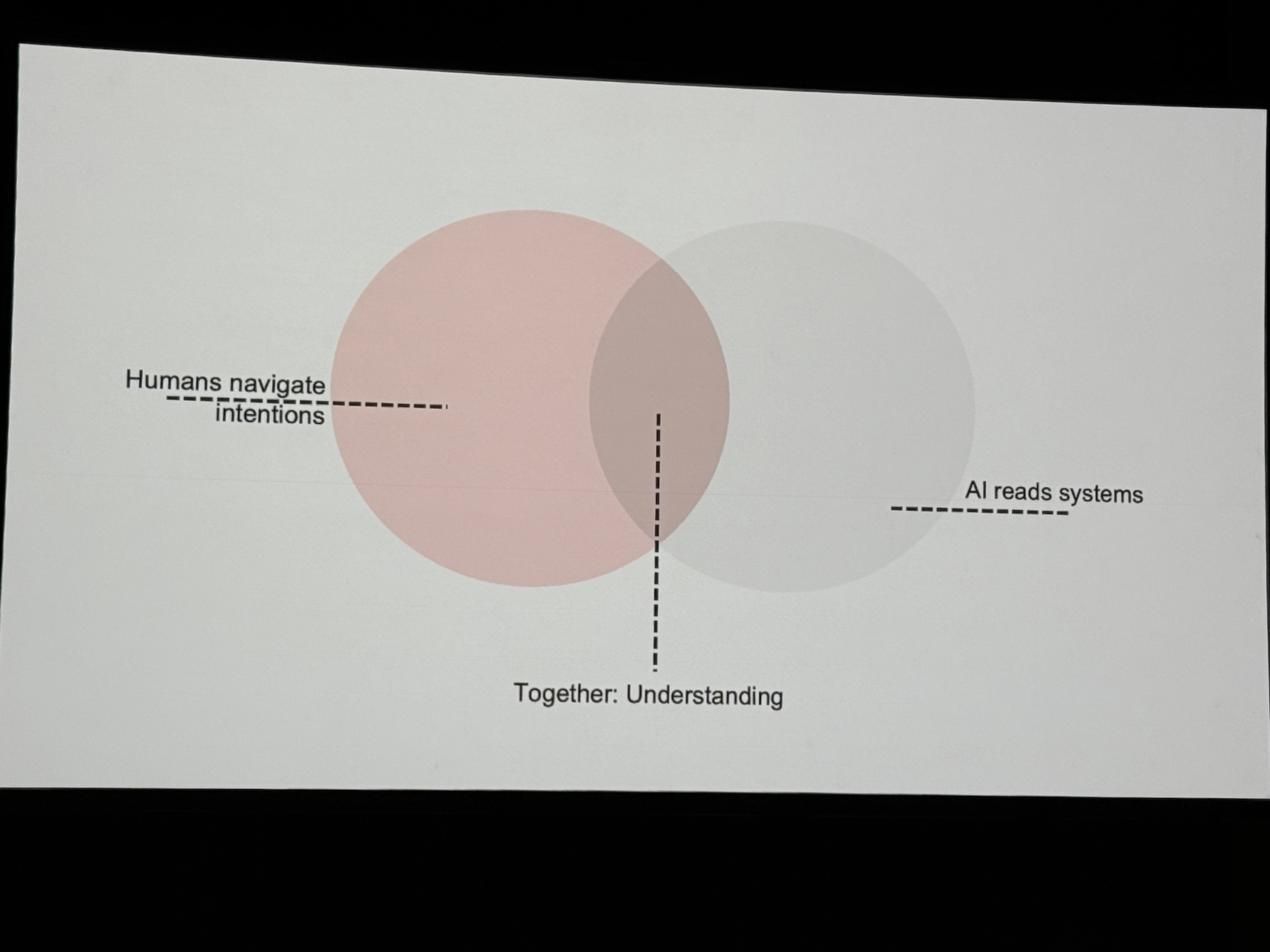
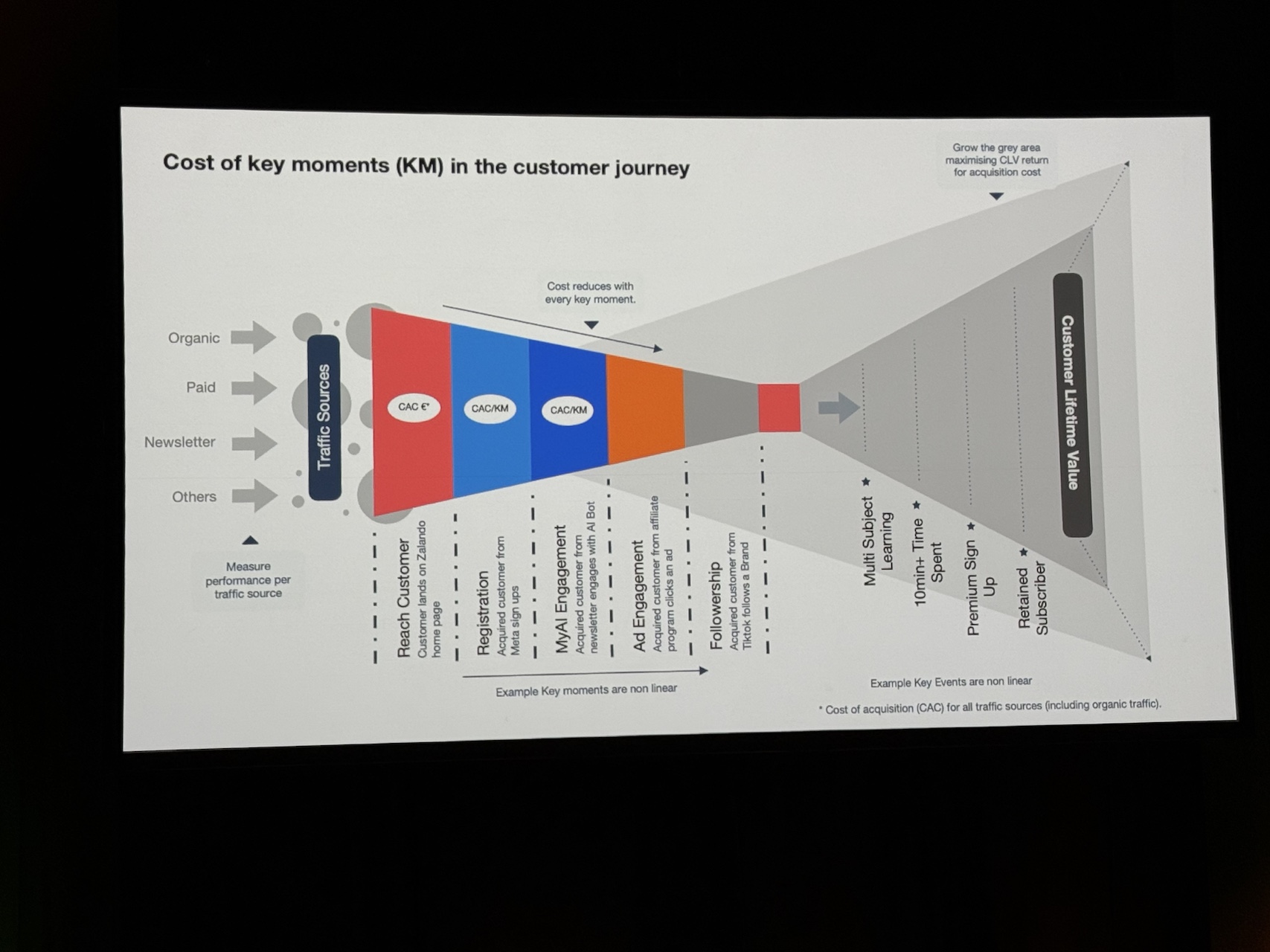
And her talk also hit closer to home for another reason. She described what happens when shared vocabulary and shared understanding are missing in an organization. 400+ authors, 10+ tools, one job to be done, millions lost annually, not to competition, but to themselves. When the foundation isn’t there, impact becomes almost impossible regardless of how good your ideas are. Fragmentation is invisible until it’s expensive.
That tension between “move fast and build” and “build the right thing the right way” ran quietly through the whole day. I don’t think either side is wrong. But it’s worth holding both.
I was glad to briefly meet Surbhi in person afterward.
Hayder Schneider: How to Build AI Products That Work for Your Customers and Your P&L
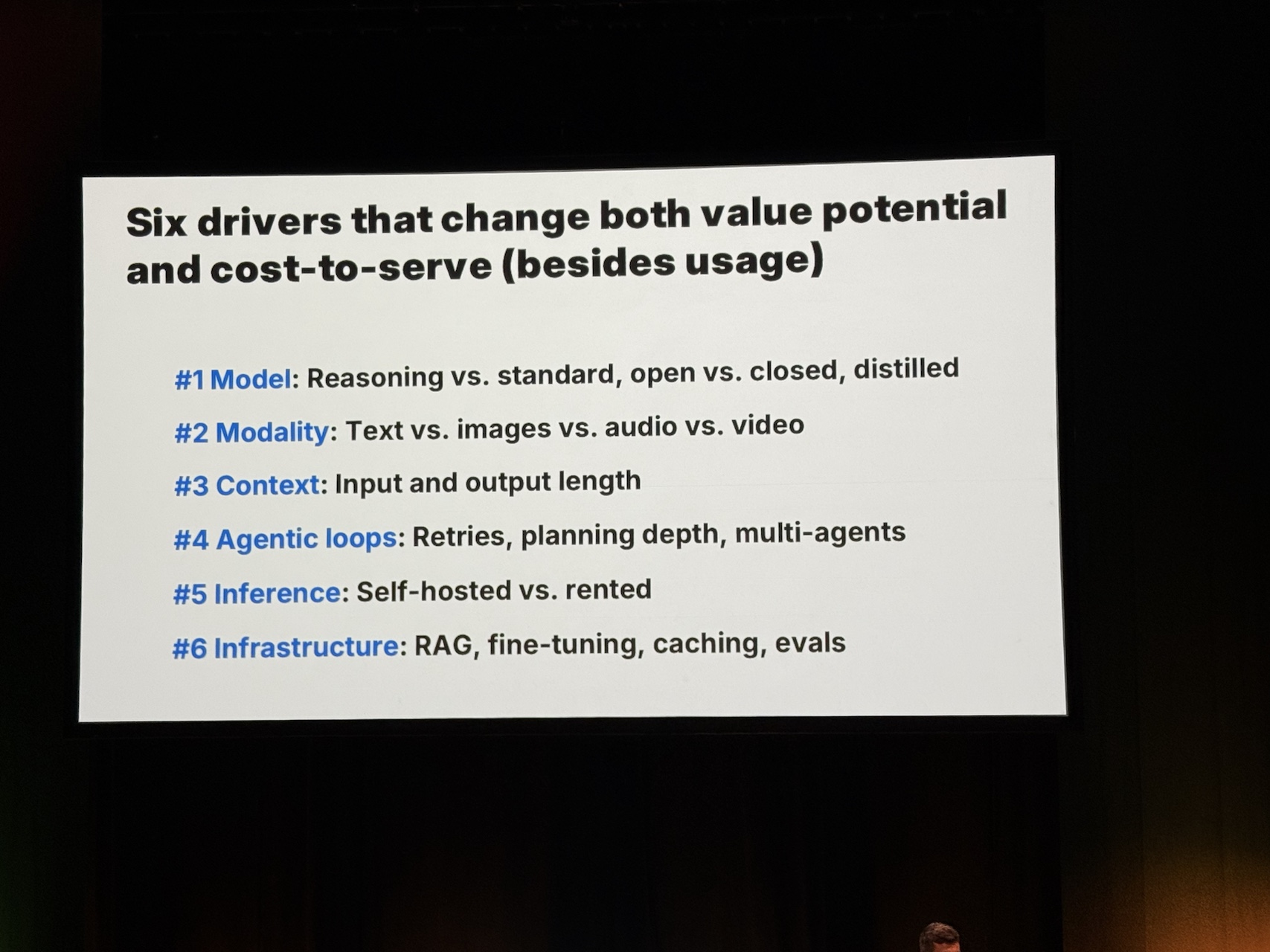
Hayder’s most valuable moment for me was a single slide on the cost drivers of AI. Unlike SaaS, AI costs are usage-dependent and shaped by a set of dimensions most product people don’t instinctively think about:
Model (reasoning vs. standard, open vs. closed), modality (text vs. images vs. audio), context length, agentic loops, inference setup (self-hosted vs. rented), and infrastructure choices like RAG, fine-tuning, and caching.
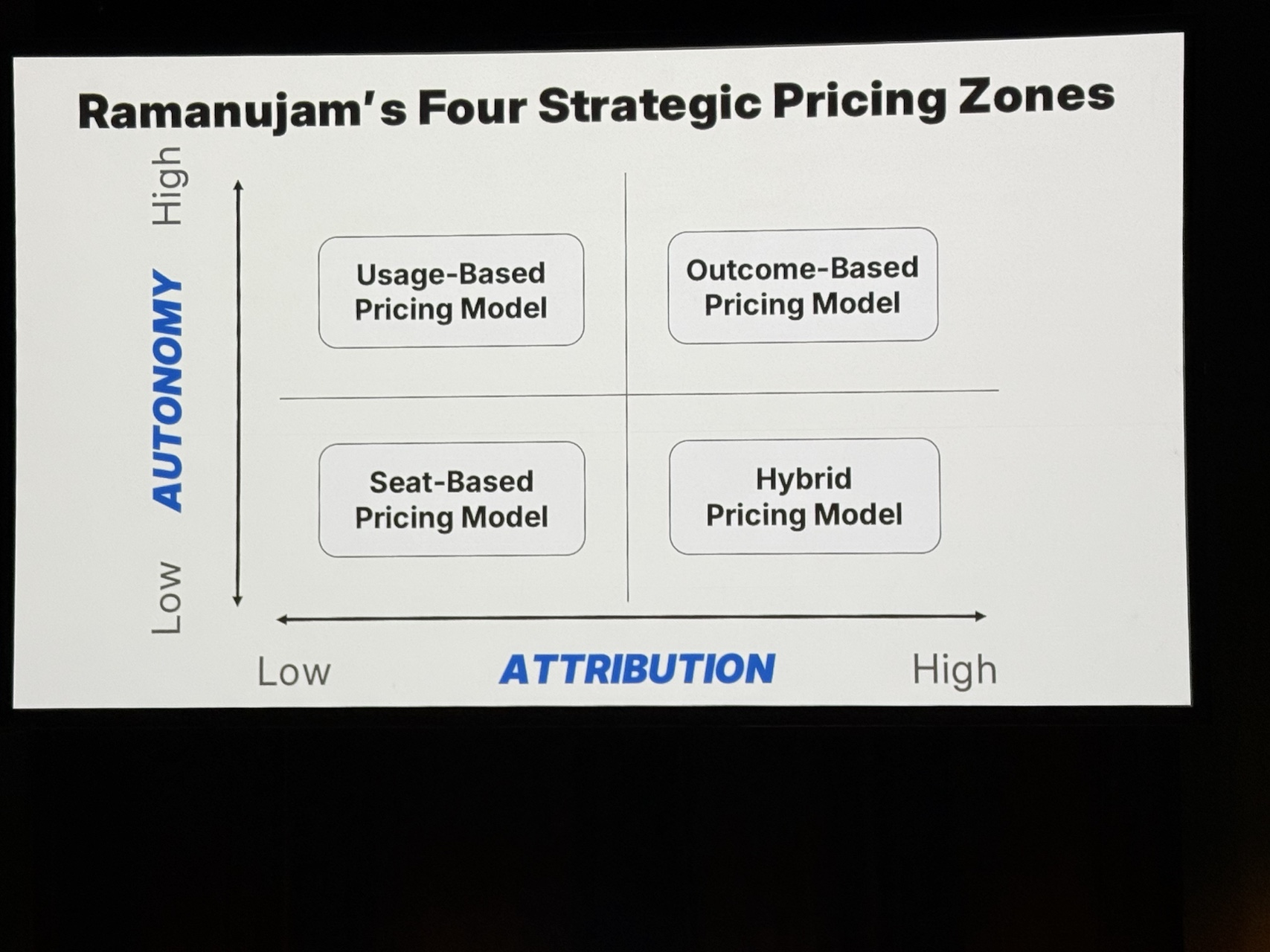
I would have loved more concrete examples here, situations where specific combinations worked or didn’t, and what he learned from them. But the framework itself is useful and I’ll be revisiting it.
Thomas Brouwer: Having a PM AI-dentity Crisis? Conviction Is Your Answer.
Thomas introduced me to a concept I hadn’t properly engaged with before: conviction.
Strong beliefs, loosely held. He distinguished between building conviction (through discovery), sharing conviction (through inspiration and focus), and forcing conviction (imposed top-down). The first two work. The third one he didn’t recommend, and in my experience neither do I.
Lots of substance here, and I’m genuinely hoping we can get Thomas to speak at ProductTank Frankfurt in H2. He’d be a great addition for the community.
Pippa Topp: Staying Human in an AI World
Pippa came in strong on empathy. Elon Musk called it a weakness of Western civilization. I disagree rather strongly.
Her point: only when you have real connection does creativity, confidence, and performance actually follow. The compounding yes. And the question she left the room with: What did you love doing as a kid? A good nudge at the right moment.
Radhika Dutt: Radically Rethinking Metrics
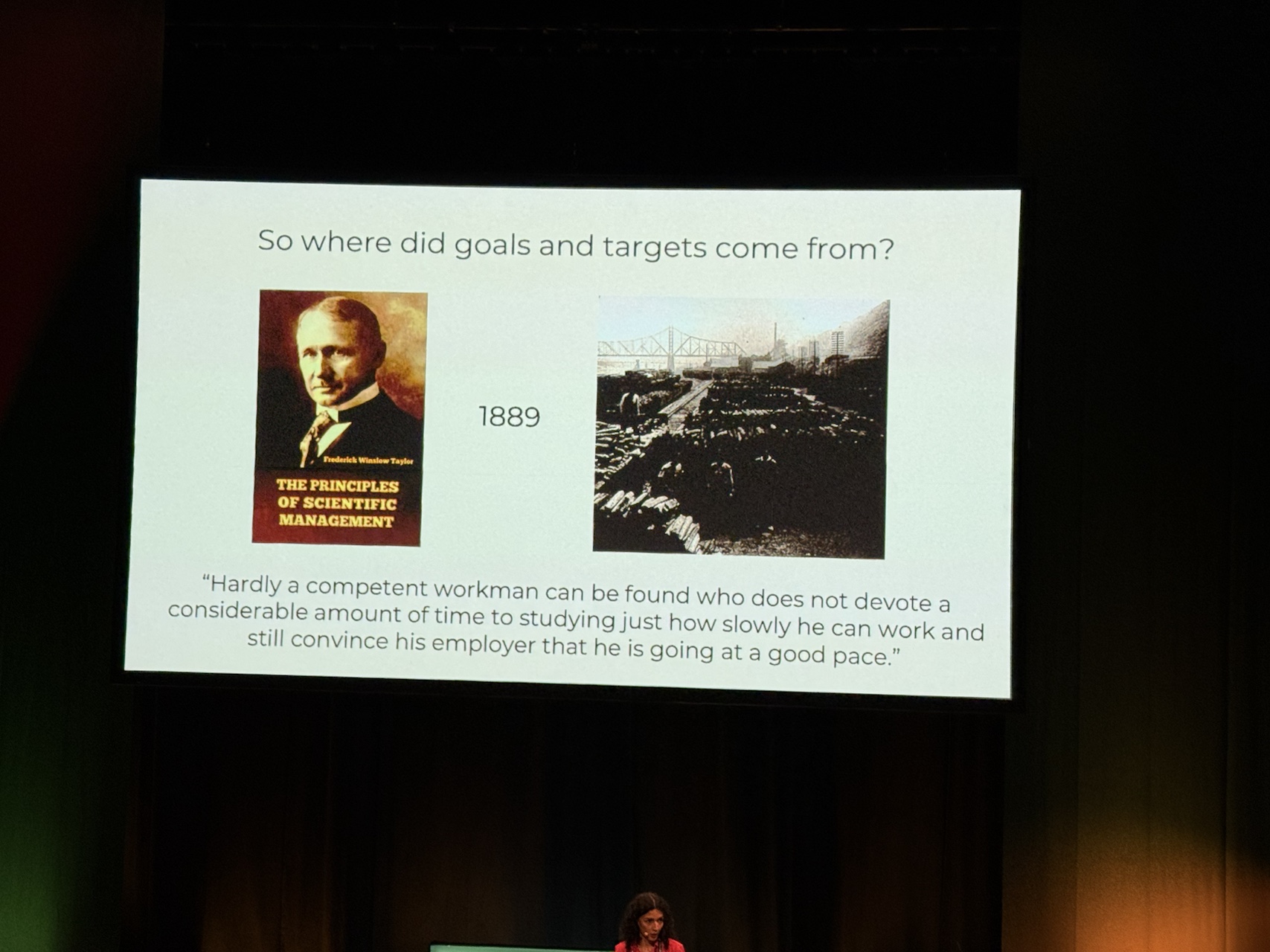
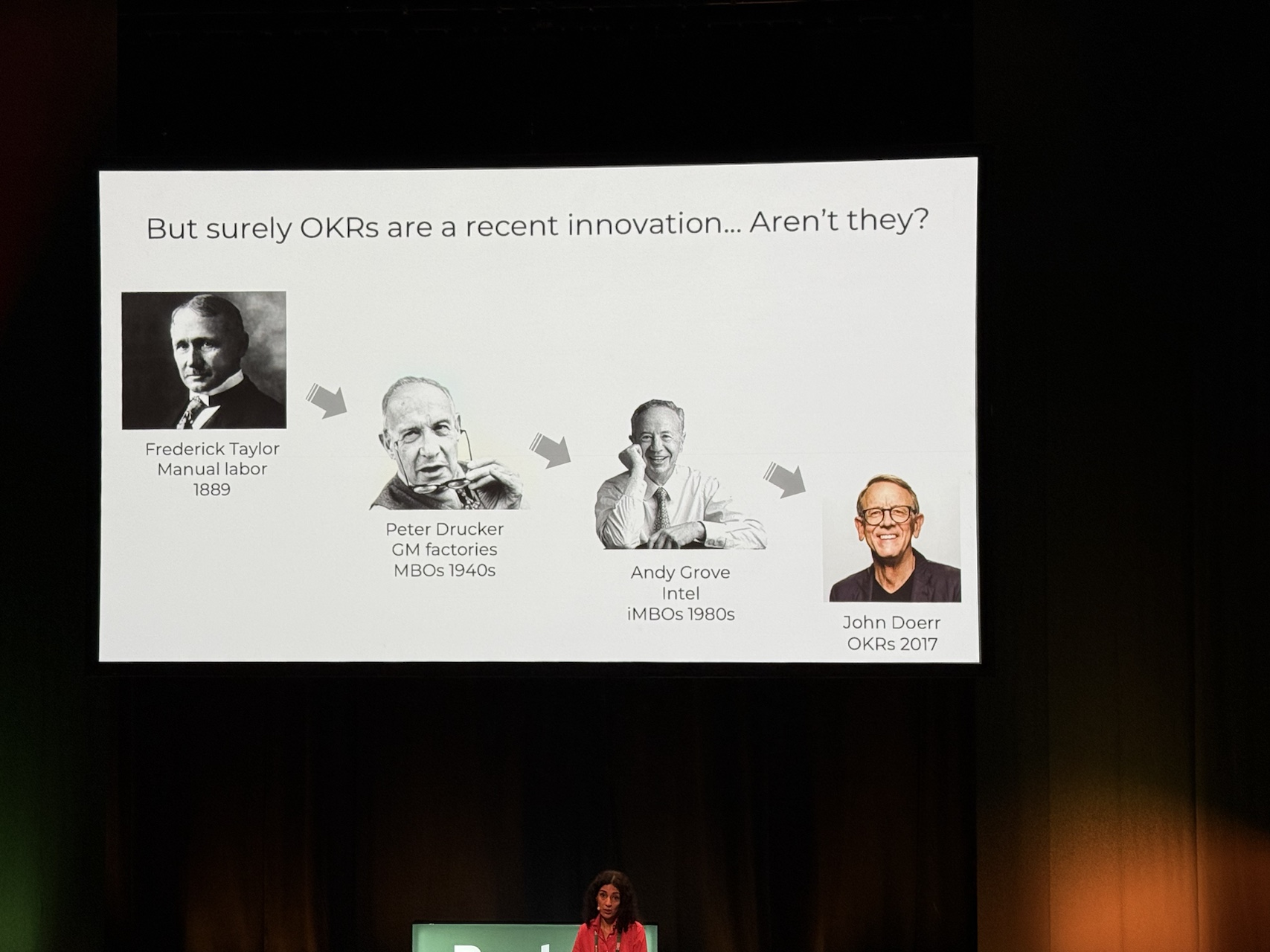
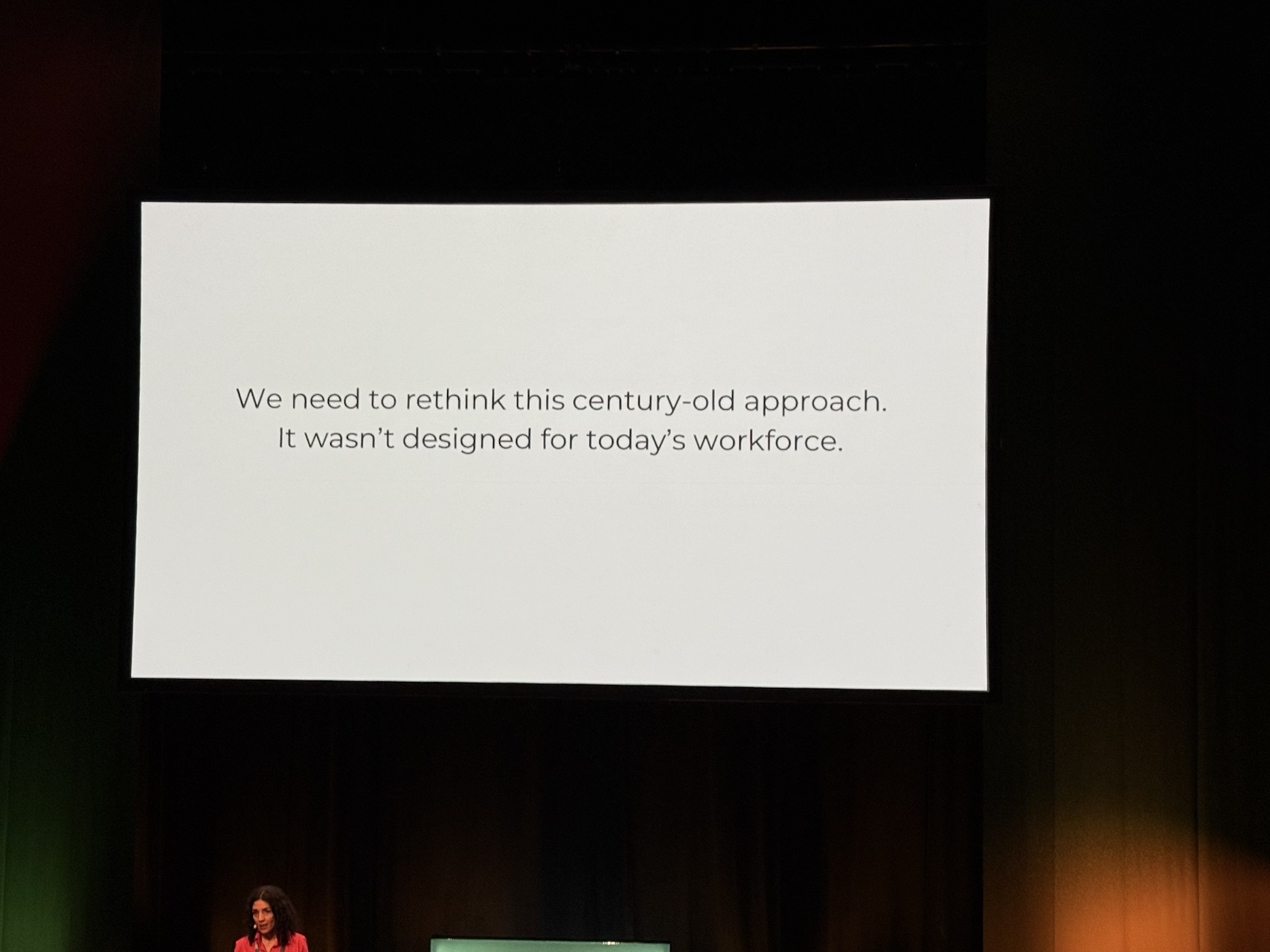
Radhika traced the lineage of goal-setting frameworks all the way back to Frederick Taylor in 1889, through Peter Drucker, Andy Grove, and John Doerr’s OKRs. Her thesis: we need to rethink a century-old approach that wasn’t designed for today’s workforce.
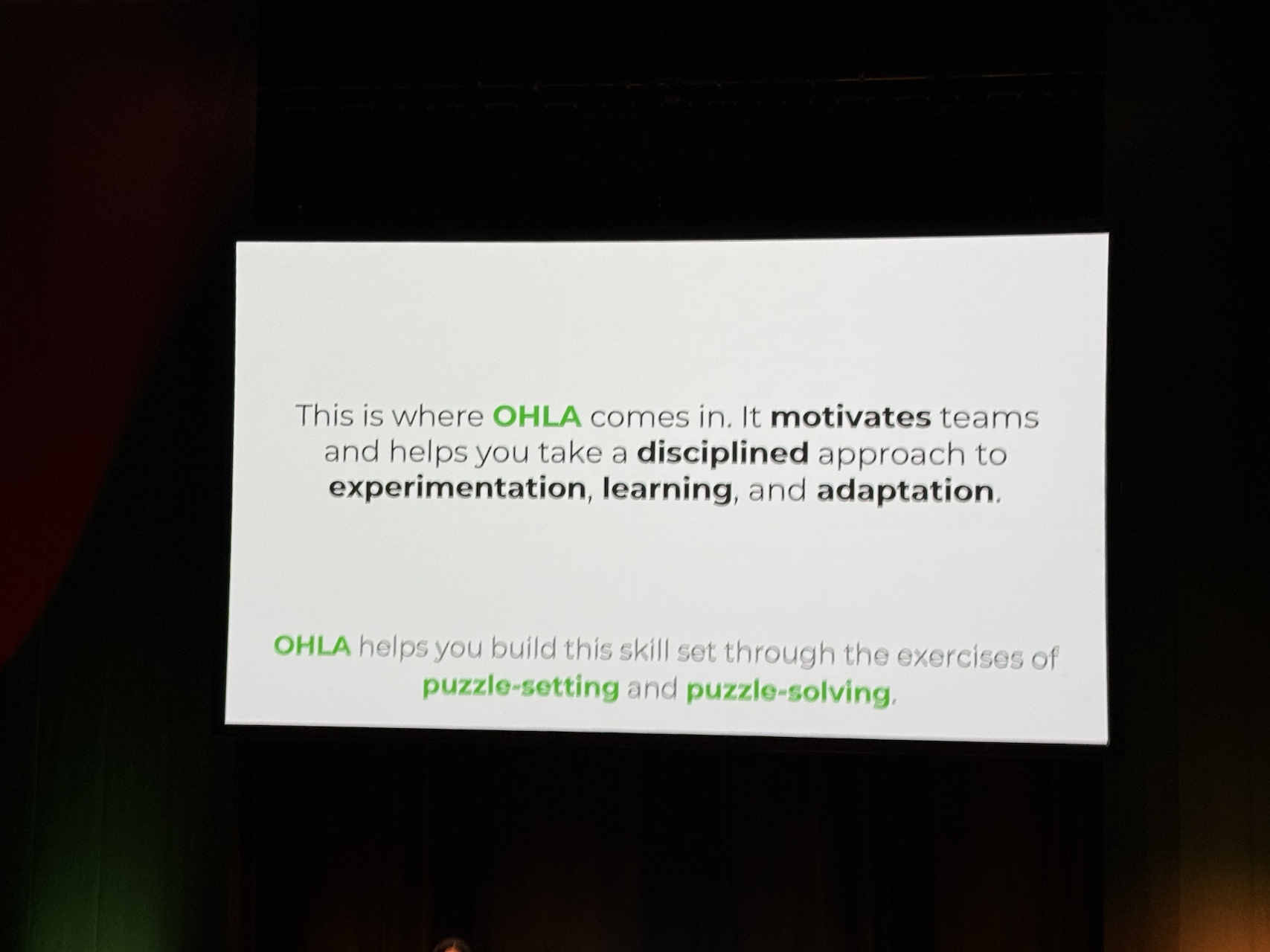
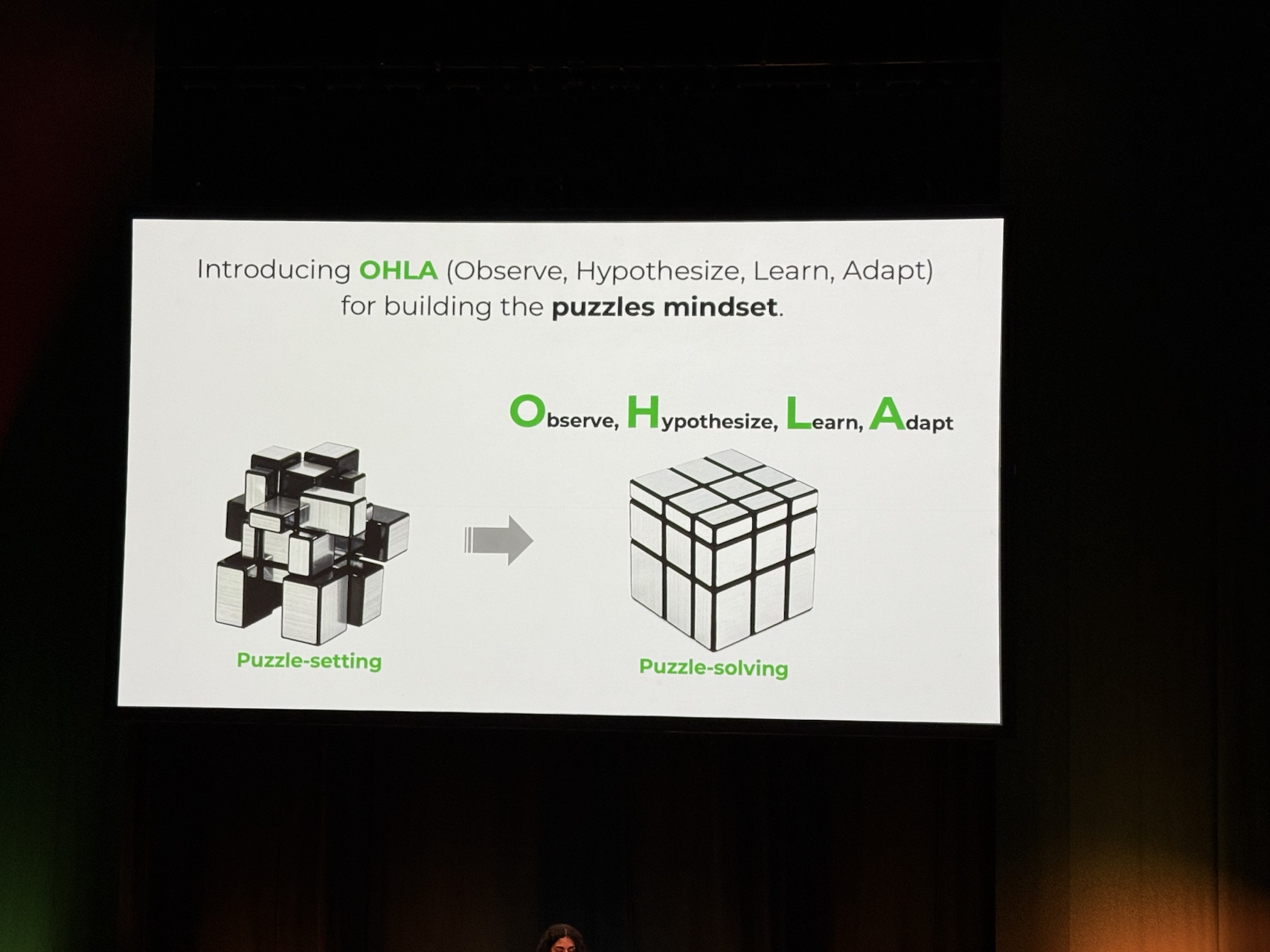
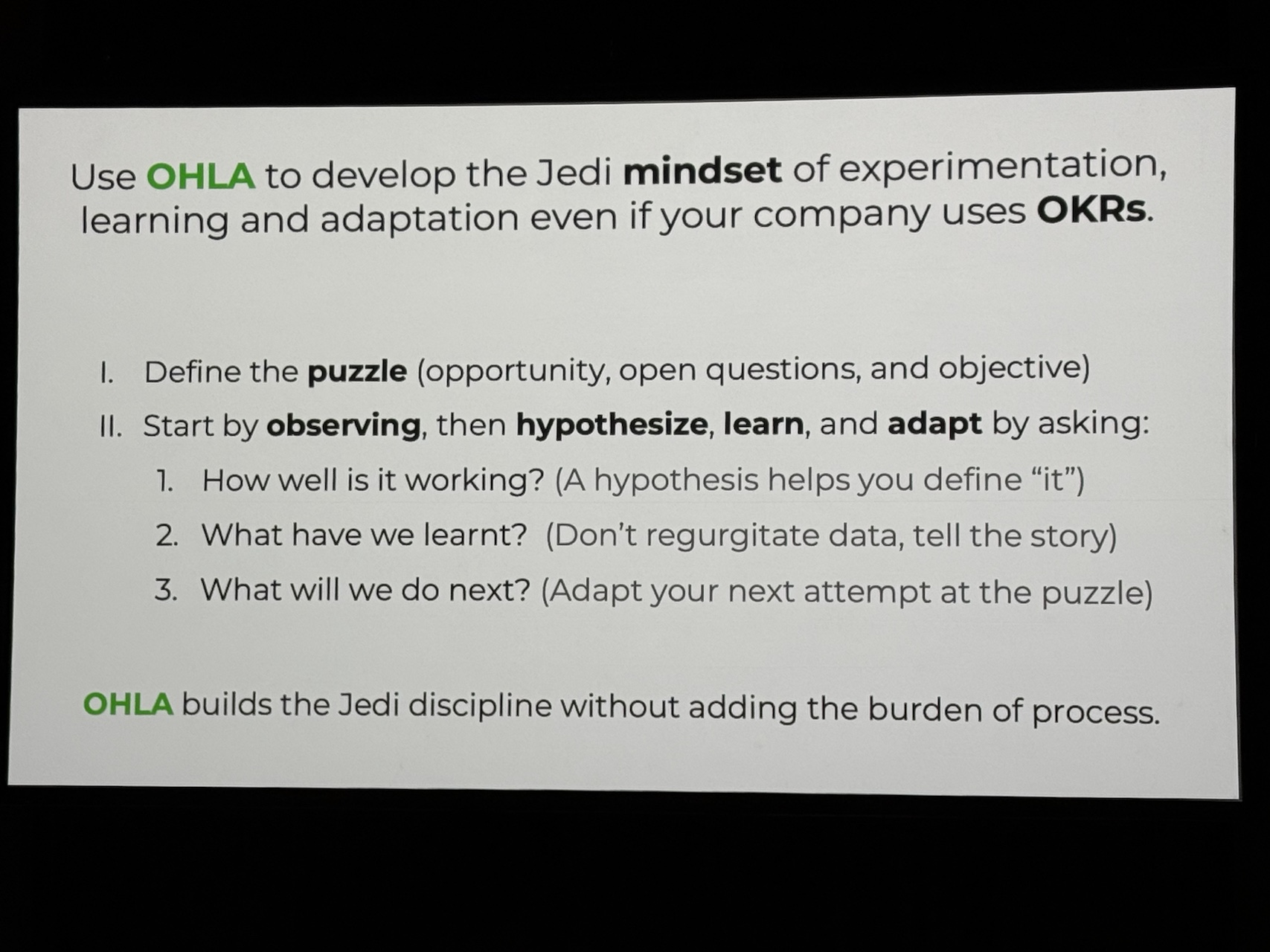
Her alternative is OHLA: Observe, Hypothesize, Learn, Adapt. From puzzle-setting to puzzle-solving. With a lovely Star Wars reference: Stormtroopers always shoot and never hit. The goal is to develop the Jedi mindset instead.
Language matters. And her storytelling made the point stick.
Elaine Kasket: Too Much of a Good Thing
Elaine closed the conference with something completely different: our digital lives after death.
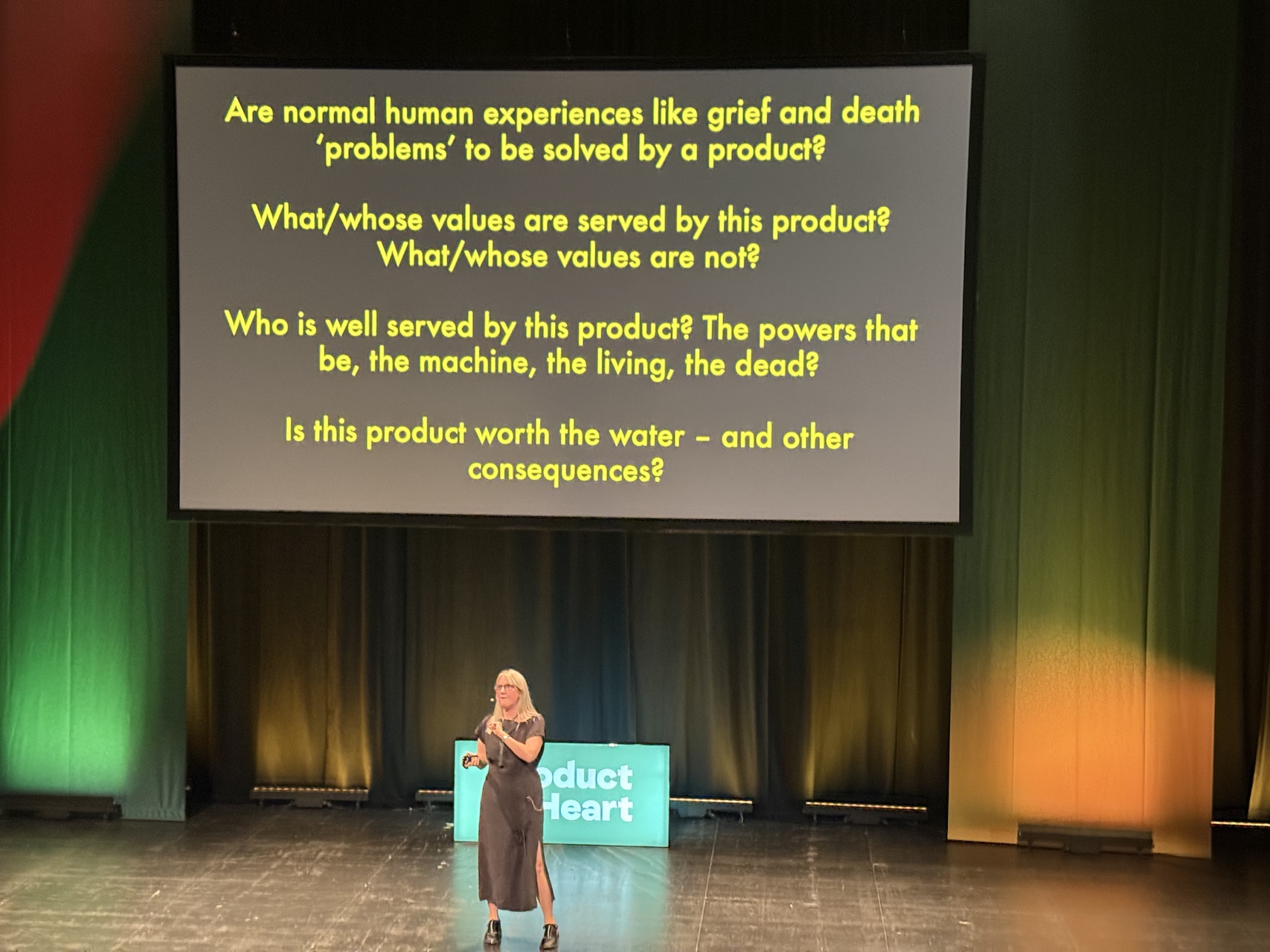
She handed out a worksheet called Design Your Digital Afterlife with ten scenarios, each asking how comfortable you are, whether you want to control it, and whether you even know how to act on it. Things like your collected work made publicly available after you’re gone, your private search history accessible to your family, your digital persona giving interviews after your death, or your family creating an AI hologram of you for special occasions.
Uncomfortable. And completely relevant for anyone building B2C products, and honestly B2B too. The ethics of digital legacy are a design problem we haven’t properly addressed yet.
Every year, Product@Heart includes one talk that steps outside product management to remind us that our work doesn’t exist in a vacuum. This year, Elaine delivered that moment with precision.
Taking stock
Product@Heart has a way of giving me both frameworks and the right questions at the right moment. This year the most important question was personal:
What can I do that AI can’t?
The honest answer: invest in judgment, taste, strategy, and genuine product sense. That’s the work. Not just the prompts, not just the automations, not just the AI-generated PRDs.
Turn and face the strange. Don’t emphasize the dark. Start contributing to the light.
What I’m taking into next week
Three things I’m committing to:
- Investing more deliberately in product sense. Not through more reading, but through more conversations with real customers and sharper problem framing.
- Starting one small AI experiment. Not to ship something. To learn something.
- Asking “is this problem worth solving?” before I get excited about the solution.
That last one is harder than it sounds.
See you next year.
What’s your take: what can AI actually not replace in your work?

