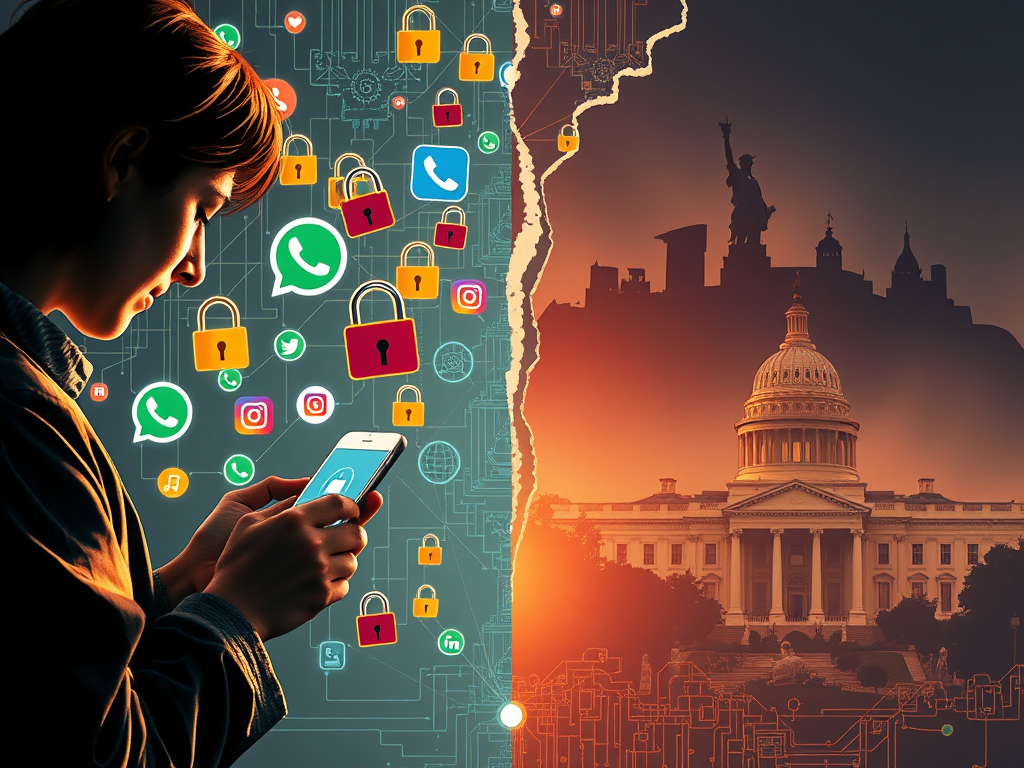
Meta AI has just landed in Germany, now live on WhatsApp, Facebook, Instagram, and Threads. As a tech enthusiast, I immediately tried using prompts to dig into my accounts, connections, and messages-only to hit a wall. Why? Europe’s strict GDPR rules block many of the deep-dive features available in the US.
What If Meta AI Had Full Access?
Imagine asking Meta AI to summarize your private WhatsApp chats, analyze your friends’ personalities, map out your social network across all platforms (WhatsApp, Facebook, Instagram, and Threads), or even tell you where your friends have been and what they think about you. Technically, this is possible-and in the US, where data rules are looser, such profiling is already happening.
But here in Europe, privacy laws mean Meta can’t access or combine your data in this way. Private WhatsApp messages, for example, are end-to-end encrypted-unless you interact directly with Meta AI, which then makes those messages available for AI training. Public posts, photos, and comments on Facebook and Instagram, however, are now being used to train Meta’s AI unless you actively object before May 27, 2025.
And yet, your data still flows to US-based servers and companies, raising concerns about who really holds the power – especially as US tech giants and political dynamics shift.
The Power Imbalance
Europe leads in privacy regulation but lacks its own global tech giants. That means our data – and the power to analyze it – remains in American hands. We’re digital consumers, not creators. Meanwhile, Meta, Apple, Google, and Amazon are limiting AI features for Europeans, citing GDPR and regulatory uncertainty. Is this really protecting us, or just holding us back?
The Role of Europe and Germany
Europe needs more than just regulation. We need investment in our own tech, smarter laws that balance privacy and innovation, and a real push for digital independence. Otherwise, we’ll keep relying on US platforms to shape our digital lives.
Big Questions
If Meta could combine all our data, it could build a detailed profile of us and our environments – governed by US law, not European. Is that the future we want?
Should Europe loosen data rules to catch up with US tech, or is our privacy worth the price of dependence?
My Own Prompts
I also asked Meta AI about these issues (see screenshots). What’s your take – are we trading too much for privacy, or not enough? What else should Europe do to protect both innovation and our digital sovereignty?


Why Digital Sovereignty Matters
This debate isn’t just about privacy or features – it’s about who controls Europe’s digital future. Right now, US tech giants build and run the infrastructure, platforms, and AI models that shape our daily lives. Even with strong privacy laws, our data – and the power to analyze it – remains in American hands.
“Europe finds itself a quasi-colony across all layers of our critical digital infrastructure… This almost complete dependence on non-European technologies has created security and economic risks that also hurt our growth prospects.”
Andy Yen, CEO of Proton
True digital sovereignty means Europe decides how data is used, stored, and leveraged-not just consuming what others build. Without our own tech investments and infrastructure, we stay dependent on foreign rules and priorities. Privacy is essential, but so is the ability to shape our digital destiny.
What are your thoughts about that? Happy to discuss.
Thank you for reading and all the best!
Patrick
 Personal Blog of Patrick Sauerwein